Is a Slab Leak Covered by Insurance? What the Forms Actually Say
The short version
- Neither policy form quoted on this page defines the term slab leak. Both describe water escaping a plumbing system, and that is the event an adjuster reads.
- The two forms split the job in the same place: the cost of getting to the escape point is treated one way, the failed pipe another.
- One 2017 form shuts out seepage it describes with six words, among them gradual, slow and trickling. Water hidden under concrete can run unseen a long time, which is why those words matter here.
- Settling and cracking of a foundation is excluded in both forms, and only the Oklahoma-hosted one spells out slabs. The ISO sample puts an exception after that group that has to be read with it.
- California's insurance department tells homeowners to find and stop leaks at the source immediately. Your policy, your state and your adjuster settle the rest.
Whether a slab leak is covered by insurance depends on how the water got out, not on the phrase slab leak, which neither policy form quoted here defines. NAIC ties homeowners cover to a discharge that is "sudden and accidental", and the Oklahoma-hosted 2017 form shuts out seepage it calls gradual. Your policy, your state and the adjuster's finding decide the rest.
The words a policy uses instead of "slab leak"
Is a slab leak covered by insurance? The forms never put the question that way, so it has to be translated first. Slab leak is a trade term: plumbers use it, this publication uses it, adjusters know it, and neither document quoted below defines it. What appears there is water leaving a plumbing system at a point that happens to lie under a floor, not inside a wall.
Three bodies describe that peril in nearly the same breath. The NAIC describes homeowners policies as covering damage from a discharge that is "sudden and accidental", keeping those quotation marks itself because the phrase is form language rather than plain English. The Insurance Information Institute names water or steam getting loose inside a plumbing, heating, cooling or fire-sprinkler system among the perils an HO-3 covers, and puts an appliance discharge on the same footing. On the California Department of Insurance's own list of perils generally covered by a homeowners policy, the entry reads "Sudden & accidental water damage".
None of it mentions concrete or foundations. It describes pipework letting go, and why buried lines do that is on what breaks a water line under a slab.
Does homeowners insurance cover slab leak repair?
Two forms are quoted here, and both split the same way.
The ISO HO-3 sample that III publishes, edition HO 00 03 10 00 of 2000, reaches the same place from the opposite side. Its water peril lists an exception for the "system or appliance from which the water or steam escaped", and its tear-out language is fenced with the word "only". Both are copyrighted documents excerpted in fragments here, and neither is the policy on your shelf.
Against a real invoice that split lands on the big items: opening and patching a floor, plus the flooring above it, is what makes these jobs expensive, while the failed section of copper or PEX is small money, as what the repair costs, method by method shows.
Free to do yourself: ask the plumber to write the scope in that vocabulary, naming the escape point, what comes out to reach it, what goes back. Where to stop: never open concrete to prove a point, and never cut a floor with tendons in it, which is an engineer's decision. Dialing (800) 555-0142 runs up no charge at any hour, and whoever answers holds a license in your state and does slab work.
What routinely falls outside slab leak insurance coverage
Exclusions matter more than perils here: water hidden under a floor runs a while before anybody notices.
| What sits outside | Whose wording | What the source says |
|---|---|---|
| Seepage over time | State Farm HW-2136, Oklahoma, 2017 | Loss that develops over time where the seepage is continuous, repeating, gradual, intermittent, slow or trickling |
| Wear and tear | Insurance Information Institute | Flood, earthquake and "routine wear and tear" sit among the losses a standard policy will not pay for |
| Upkeep left undone | Insurance Information Institute | Keeping the house up is the owner's job, and III says a policy pays for none of what follows from upkeep left undone, naming mold and pest infestation alongside it |
| Things that wear out | NAIC consumer guide, footered 2022 | "A homeowners policy isn't a maintenance contract" |
| Settling and cracking | Both forms, worded differently | Settling, cracking, shrinking, bulging or expansion of foundations, footings, walls and floors; only the Oklahoma-hosted form spells out slabs |
| Roots | State Farm HW-2136, Oklahoma, 2017 | Its water peril excludes loss from the pressure from or presence of tree, shrub or plant roots |
| Flood | Insurance Information Institute | III puts flood outside the standard homeowners and renters policy alike |
California's department reaches the same ground from the consumer side. Its not-covered list carries water damage from seepage or leaks, earth movement, mold, wear and tear or maintenance, and neglect, each as its own entry. Its care over mold is worth copying: mold damage caused by a covered peril may be covered, a long way from mold being covered outright.
One caution on settling. The ISO sample places an exception after that group, restoring cover for Coverage A or B loss resulting from an accidental discharge from a plumbing system, so exclusion and exception are read together. That reading belongs to your adjuster.
Is a slab leak covered by insurance after it has dripped for months?
This is where under-slab claims get decided. A pipe below concrete is invisible by design. The same failure can present as a line that let go last Tuesday or a joint that wept for a year into the fill, and those two stories sit on opposite sides of the six words the Oklahoma-hosted form uses: continuous, repeating, gradual, intermittent, slow, trickling.
Nobody can predict how that reads on your house, and any page promising a payout is selling something. The exclusion is written around loss that occurs or develops over a period of time, which is that form's wording, not a finding about your floor. The tells worth acting on are ranked on the signs plumbers trust first.
Put it to someone who opens floors for a living
Call (800) 555-0142Costs nothing to dial. A licensed plumber who does slab work answers, not a scripted call center.Licensed partners who locate and repair slab leaks- Plumbers who locate the leak before anyone breaks concrete
- Someone picks up at 3 a.m. too
- No charge to call, no obligation to book
- Your quote comes from the plumber, with nothing added by us
What a homeowner can do the day a leak is suspected
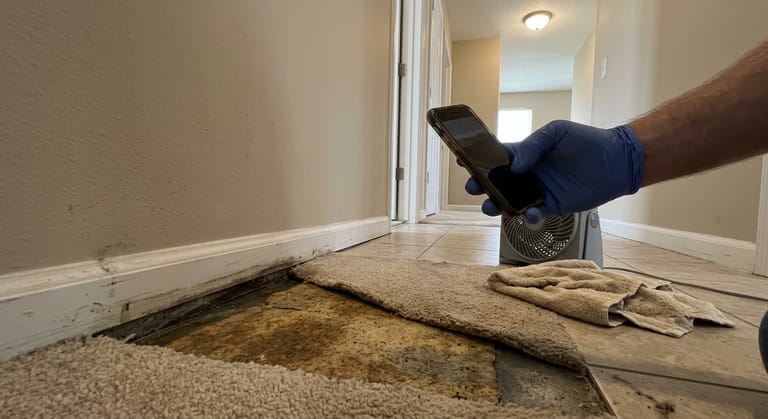
California's insurance regulator puts the duty plainly: an obvious water problem is never to be ignored, and the homeowner's move is to go after the source and shut it off without waiting. The same brochure adds a caution rather than a coverage rule, that damage pointing to a leak which ran over a period of time may already carry mold.
- Read the meter the way EPA says to. Check it before and after two hours with no water used anywhere. If it changes at all, EPA's wording is that you probably have a leak. Note both readings, dated.
- Photograph what shows. Damp carpet edge, warm tile, stained baseboard, the meter register.
- Find the month the bill moved. Utility statements are dated records of when water started going where it should not.
- Get the scope in the form's own vocabulary. Escape point, access, tear out and replace, what is restored.
- Dry what got wet. EPA sets the window at 24 to 48 hours for drying out what the water reached, and says that materials dried inside it will in most cases not grow mold.
Water crossing a floor now changes the order, because the main valve comes first: that sequence is on what to do about a leak under a concrete slab today. Everything above costs nothing. Where it stops is diagnosis, and (800) 555-0142 books nothing.
Burst pipe under a concrete floor, and the conditions attached
III names burst pipes among the water losses standard homeowners and renters insurance covers, alongside wind driven rain and ice dam damage. Even there the conditions are real.
Freezing shows it clearest. The NAIC writes that policies "often cover the resulting water damage if frozen pipes burst, if the homeowner has taken reasonable steps to maintain the pipes and keep them from freezing", and that where an insurer determines the plumbing system was neglected, the damage "may not be covered". NAIC adds that policies generally require a minimum temperature indoors, or the supply shut off if the home is vacant, and it names no number. The ISO sample applies its freezing peril only where reasonable care was used to maintain heat, or to shut off the water supply and drain the systems, and it adds a further requirement where the building has a fire protective sprinkler system.
Beneath a floor slab none of it changes shape. A burst line under concrete is still an escape from a plumbing system, and the form asks the same two questions: how did the water get out, and what comes apart to reach it.
Where to ask instead of a website
Three places outrank every article here, this one included.
Nothing here inspects a slab, locates a leak, files a claim or advises on one. This is a publication with a phone line, and the line reaches plumbers, not adjusters.
The step that turns a leak into a scope
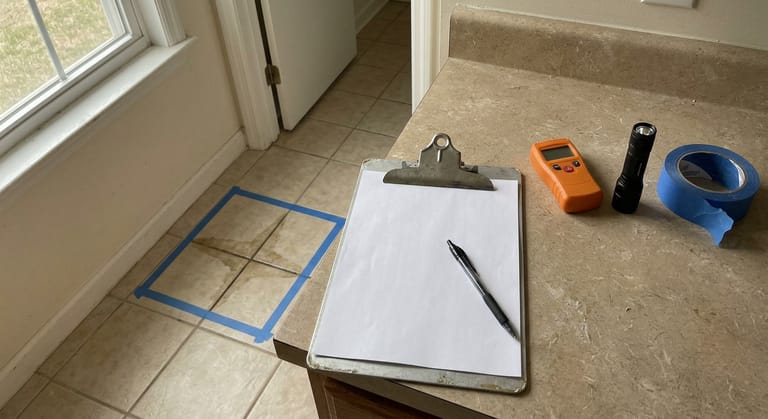
An adjuster works from documents, and the one that matters most starts with somebody pinpointing the failure: which line, where under the floor, what opens to reach it, what goes back. Until that exists there is nothing to submit or price. The routes open once the spot is known are in the four repair methods compared, and the questions to ask before hiring are on how to check a plumber who does slab work.
Dial (800) 555-0142 at any hour. The call costs nothing, commits you to nothing, and puts a licensed plumber who opens floors for a living on the line. Have your meter readings handy, plus which billing period first ran high, and ask for the scope in writing.
Put it to someone who opens floors for a living
Call (800) 555-0142Costs nothing to dial. A licensed plumber who does slab work answers, not a scripted call center.Licensed partners who locate and repair slab leaks- Plumbers who locate the leak before anyone breaks concrete
- Someone picks up at 3 a.m. too
- No charge to call, no obligation to book
- Your quote comes from the plumber, with nothing added by us