6 Slab Leak Pictures, and What Each One Means
Slab leak pictures come down to 6 scenes, and the first 3 need no tools: a wet carpet edge, a dark grout line, a meter dial that keeps turning. The other 3 appear once a plumber is on site.
Each reads the same way: what is in the frame, what it means, what to do next. A slab leak photograph proves damage, never position.
1. The dark edge where carpet meets the wall
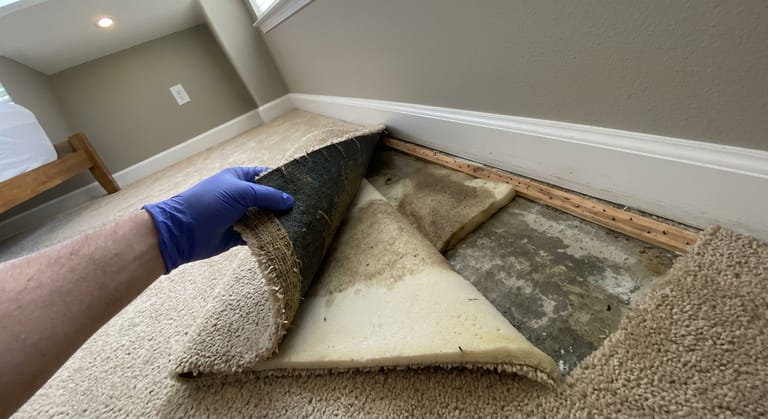
Carpet folded off the tack strip, the pad two shades darker than the room.
Water runs sideways through fill and surfaces where it meets least resistance, so the damp corner is an exit, not the break.
Fold the corner back, shoot it, stop there. HomeGuide's flooring guide, dated February 5, 2026, puts carpet removal at $0.70 to $1.60 per square foot, and a wet pad tells nobody where to cut. The seven signs of a slab leak rank the proof.
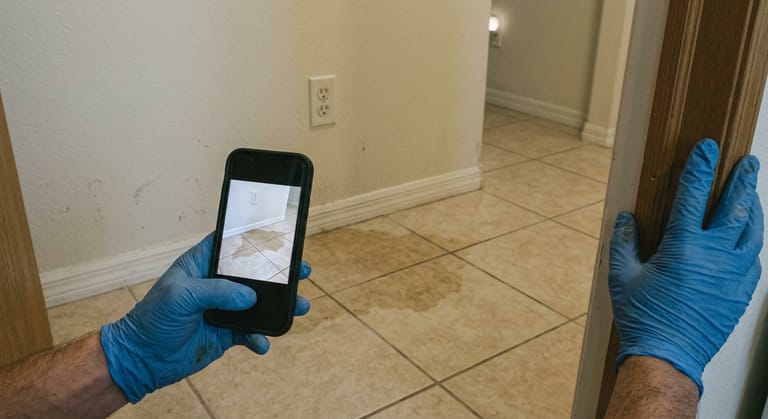
2. Grout that stays dark after the floor dries
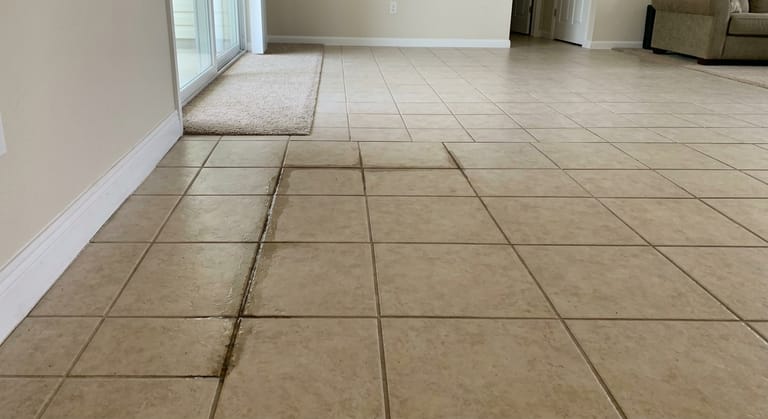
One grout joint darker than the grid around it, long after the rest dried.
Concrete wicks. A slab leak under tile pushes moisture along the most porous path, and grout beats glazed tile, so the stain wanders away from the failure.
Shoot it at night and again in the morning. Hold off on demolition: tile removal runs $2 to $7 per square foot on that HomeGuide page.
3. The leak detection dial, caught mid turn
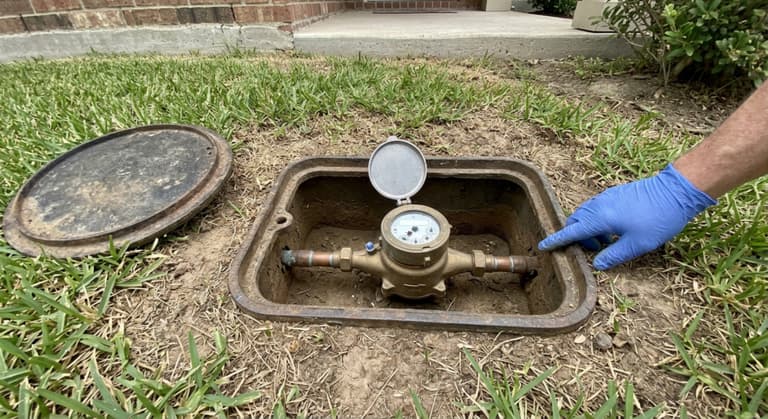
The meter lid open, the register in focus, a triangle or snowflake turned from where it sat a minute ago.
Meters vary, and the Portland Water Bureau allows that dial two forms, triangular or shaped like a snowflake, warning that a drip barely stirs either.
Shoot it, use no water for hours, shoot again from the same spot. The rest of the protocol is how to find a water leak under a slab.
4. A bright ribbon across a thermal frame
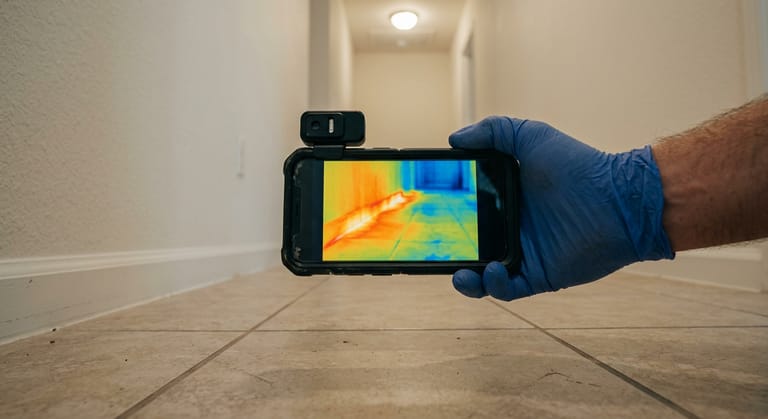
False color across bare floor, a warm line leaving a wall and stopping partway.
Read it as a candidate zone, not an address. EPA guidance for utilities surveying buried mains describes thermal devices as looking for temperature differences in surrounding ground caused by saturation, then lists three weaknesses:
- the variations may not be very large;
- the image gives no indication of the size of the leak;
- ground water can mask a leak.
Ask what confirmed the ribbon: sound, isolation, another method. EPA's table logs 5 to 10 minutes of setup and 15 to 30 minutes on station for that work, so a camera waved over a floor for ninety seconds is a sales prop.
5. Concrete cut open, with the pipe exposed
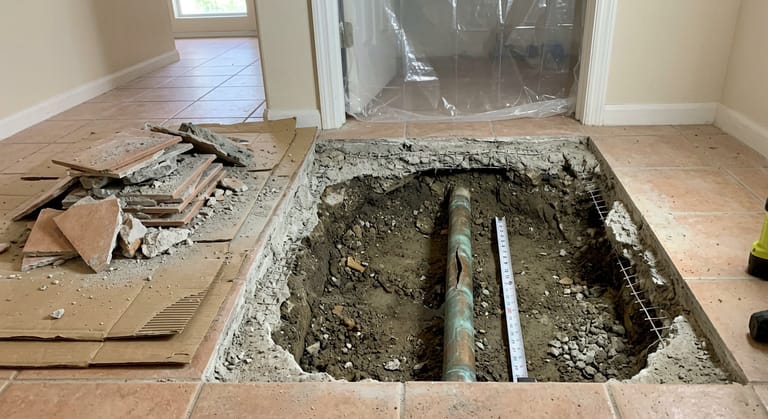
A rectangle chopped through the floor, rubble aside, a copper line in damp fill, the failure visible.
Insist on this frame before the hole closes: the failed section in daylight, tape beside it. HomeGuide puts breaking the slab, or trenching down to the failed pipe, at $500 to $3,000, and that buys access alone.
Which route this implies is worked through in how a slab leak gets repaired.
6. A new line running overhead instead of underground
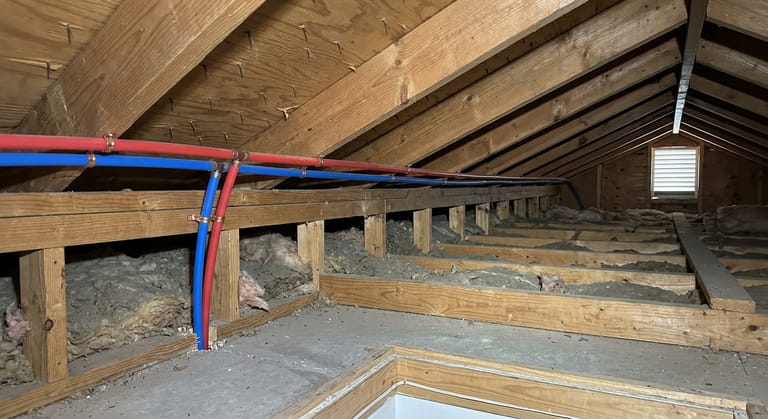
PEX or copper stapled along attic framing, dropping inside a wall cavity, fresh drywall below.
The buried run was abandoned in place, the water goes over the top, and the floor stays shut.
What to send, and who should see it
Slab leak pictures are evidence, nothing more: they date the damage and hold an estimate to something visible.
- Two meter frames, timestamped, plus how long the house sat quiet.
- Every wet surface, wide then close, with a shoe for scale.
- The water heater corner, since a warm floor points at the hot line.
- Anything already opened, before it is covered.
Then stop at concrete: no coring, no chipping, no rented breaker. Nothing is billed for dialing (800) 555-0142, a licensed plumber takes the call, and your photos will cut it short. What to ask before booking is in choosing a plumber for slab leak work.
Put it to someone who opens floors for a living
Call (800) 555-0142Costs nothing to dial. A licensed plumber who does slab work answers, not a scripted call center.Licensed partners who locate and repair slab leaks- Plumbers who locate the leak before anyone breaks concrete
- Someone picks up at 3 a.m. too
- No charge to call, no obligation to book
- Your quote comes from the plumber, with nothing added by us